Buy studio37.eu ?
We are moving the project
studio37.eu .
Are you interested in purchasing the domain
studio37.eu ?
domain@kv-gmbh.de · 0541-91531010
Buy studio37.eu ?
How do you calculate the braking distance, the braking process, and the braking deceleration?
The braking distance can be calculated using the formula: braking distance = (initial velocity^2) / (2 * deceleration), where the deceleration is the rate at which the vehicle slows down. The braking process involves the driver applying the brakes, which causes friction between the brake pads and the wheels, leading to a decrease in the vehicle's speed. The braking deceleration can be calculated by dividing the change in velocity by the time it takes for the vehicle to come to a complete stop. **
How do you calculate the braking time and braking distance?
Braking time and braking distance can be calculated using the formula: Braking distance = (initial velocity^2) / (2 * deceleration) Where initial velocity is the speed of the vehicle before braking, and deceleration is the rate at which the vehicle slows down. Braking time can be calculated by dividing the braking distance by the initial velocity. These calculations are based on the assumption of constant deceleration, and may vary depending on factors such as road conditions and the vehicle's braking system. **


Similar search terms for Braking
Top-Angebote
Products related to Braking:
-
ClearBags "Crystal Packaging Adhesive Flap Bag Great For Artwork and Photography Bag Size: 20 7/16"" x 30 1/4"" 100 Bags Crystal Clear Bags""Our B2030 Crystal Clear Flap Seal Bag measures 20 7/16"" x 30 1/4"" and holds a 20"" x 30"" product. Ideal for art and photography with double mats with backing or single mats with foam board up to 5/16 inch thick. This bag features an adhesive seal on..."92,74 $*Shipping: 0,00 $Secure redirect to the provider
-
Loungefly Care Bears x Sesame Street Crossbody Bag - Official Collaboration, Character-Driven Artwork, Crossbody DesignDiscover the Loungefly Care Bears x Sesame Street Crossbody Bag, a playful and collectible accessory designed for fans who want a compact way to carry their essentials. This official Loungefly crossbody bag features the Care Bears x Sesame Street design, with colorful artwork highlighting beloved Care Bears and Sesame Street characters across the exterior. The crossbody design offers a hands-free carrying option ideal for everyday outings, events, or themed gatherings. Perfect for fans and collectors, this crossbody bag lets you show your fandom while keeping your daily essentials secure and within easy reach. Its playful design pairs well with a range of outfits, making it a practical collectible that adds personality to both casual looks and convention outfits. A great accessory for fans of both Care Bears and Sesame Street.75,00 £*Shipping: 0,00 £Secure redirect to the provider
-
Pan Make Brilliant Work: Lessons on Creativity, Innovation and Success by Rod Judkins - Paperback - Self-Help/Business Creativity Guide, Author ofMake Brilliant Work is an inspiring guide by Rod Judkins, drawing on the real-life stories of visionaries from Frida Kahlo to Steve Jobs. This paperback book reveals the methods and mindsets that turn ordinary effort into extraordinary results. Judkins proves that talent alone never guaranteed success — persistence, risk-taking and original thinking did. A motivating read for anyone wanting to unlock their creative potential at work or in life. The book profiles figures who failed at school, were told they lacked talent, or were fired more than once, yet went on to achieve great things. Written by Rod Judkins, published by Pan Macmillan, this book is a reassuring truth: you don't have to be naturally brilliant to produce brilliant work.2,99 £*Shipping: 2,99 £Secure redirect to the provider


-
What is the difference between videography and photography?
Videography involves capturing moving images and recording audio to create a video, while photography involves capturing still images. Videography requires the use of a video camera and often involves editing and post-production work to create a final video product. Photography, on the other hand, focuses on capturing a single moment in time and does not involve recording audio. Both videography and photography require a good eye for composition and lighting, but videography adds the element of motion and sound. **
-
What are the differences between braking to walking speed and braking?
Braking to walking speed typically involves gradually reducing speed until coming to a complete stop, whereas braking refers to the act of slowing down a moving vehicle. When braking to walking speed, the goal is to smoothly decelerate without any sudden stops, while braking may involve more forceful actions to slow down quickly. Additionally, braking to walking speed is often used in situations where a vehicle needs to stop at a precise location, such as at a crosswalk or intersection. **
-
How do you calculate braking time and braking distance in physics?
In physics, braking time and braking distance can be calculated using the equations of motion and the principles of kinematics. The braking time can be calculated using the equation t = v/u, where t is the braking time, v is the final velocity, and u is the initial velocity. The braking distance can be calculated using the equation d = (v^2 - u^2) / (2a), where d is the braking distance and a is the deceleration. These equations take into account the initial and final velocities, as well as the deceleration of the object to determine the braking time and distance. **
-
Is braking a reflex?
Braking can be considered a reflex in certain situations. When a driver reacts to a sudden obstacle or hazard on the road by immediately pressing the brake pedal, it can be seen as a reflexive action. This is because the response is automatic and occurs without conscious thought. However, braking can also be a learned behavior, as drivers are trained to use their brakes in specific situations through practice and experience. Therefore, while braking can be a reflex in some cases, it can also be a learned and intentional action. **
What is the formula for braking acceleration and braking time in physics?
The formula for braking acceleration is given by \( a = \frac{v_f - v_i}{t} \), where \( a \) is the braking acceleration, \( v_f \) is the final velocity, \( v_i \) is the initial velocity, and \( t \) is the time taken to come to a stop. The formula for braking time can be calculated using the equation \( t = \frac{v_f - v_i}{a} \), where \( t \) is the braking time. These formulas are used to calculate the rate at which an object slows down when braking. **
What is the difference between a full braking and an emergency braking?
Full braking refers to applying the brakes with maximum force in a controlled manner to slow down or stop the vehicle. This can be done in response to normal traffic conditions or when approaching a stop sign or traffic light. On the other hand, emergency braking is a sudden and forceful application of the brakes in response to an unexpected hazard or danger, such as a pedestrian stepping into the road or a vehicle suddenly stopping in front. Emergency braking is typically done to avoid a collision and requires quick reflexes and a strong, immediate response from the driver. **
Top-Angebote
Products related to Braking:
-
Classic Touch "Milk Dispenser Gold Floral Artwork Design W/ Handle - 8"""This porcelain milk dispenser is designed with a beautiful floral design. whether your serving family or friends this set will truly give that extra statement to your table setting.29,99 $*Shipping: 0,00 $Secure redirect to the provider
-
Classic Touch Set of 6 Water Glasses with 14K Gold Artwork Brick Design"This set of 6 water glasses has been gorgeously designed with gold design. They are Made of sturdy glass which makes it an elegant choice for any table setting or decor. Measures 3.5""D x 8""H"112,49 $*Shipping: 0,00 $Secure redirect to the provider
-
ClearBags "Crystal Packaging Adhesive Flap Bag Great For Artwork and Photography Bag Size: 20 7/16"" x 30 1/4"" 100 Bags Crystal Clear Bags""Our B2030 Crystal Clear Flap Seal Bag measures 20 7/16"" x 30 1/4"" and holds a 20"" x 30"" product. Ideal for art and photography with double mats with backing or single mats with foam board up to 5/16 inch thick. This bag features an adhesive seal on..."92,74 $*Shipping: 0,00 $Secure redirect to the provider
-
Loungefly Care Bears x Sesame Street Crossbody Bag - Official Collaboration, Character-Driven Artwork, Crossbody DesignDiscover the Loungefly Care Bears x Sesame Street Crossbody Bag, a playful and collectible accessory designed for fans who want a compact way to carry their essentials. This official Loungefly crossbody bag features the Care Bears x Sesame Street design, with colorful artwork highlighting beloved Care Bears and Sesame Street characters across the exterior. The crossbody design offers a hands-free carrying option ideal for everyday outings, events, or themed gatherings. Perfect for fans and collectors, this crossbody bag lets you show your fandom while keeping your daily essentials secure and within easy reach. Its playful design pairs well with a range of outfits, making it a practical collectible that adds personality to both casual looks and convention outfits. A great accessory for fans of both Care Bears and Sesame Street.75,00 £*Shipping: 0,00 £Secure redirect to the provider
-
How do you calculate the braking distance, the braking process, and the braking deceleration?
The braking distance can be calculated using the formula: braking distance = (initial velocity^2) / (2 * deceleration), where the deceleration is the rate at which the vehicle slows down. The braking process involves the driver applying the brakes, which causes friction between the brake pads and the wheels, leading to a decrease in the vehicle's speed. The braking deceleration can be calculated by dividing the change in velocity by the time it takes for the vehicle to come to a complete stop. **
-
How do you calculate the braking time and braking distance?
Braking time and braking distance can be calculated using the formula: Braking distance = (initial velocity^2) / (2 * deceleration) Where initial velocity is the speed of the vehicle before braking, and deceleration is the rate at which the vehicle slows down. Braking time can be calculated by dividing the braking distance by the initial velocity. These calculations are based on the assumption of constant deceleration, and may vary depending on factors such as road conditions and the vehicle's braking system. **
-
What is the difference between videography and photography?
Videography involves capturing moving images and recording audio to create a video, while photography involves capturing still images. Videography requires the use of a video camera and often involves editing and post-production work to create a final video product. Photography, on the other hand, focuses on capturing a single moment in time and does not involve recording audio. Both videography and photography require a good eye for composition and lighting, but videography adds the element of motion and sound. **
-
What are the differences between braking to walking speed and braking?
Braking to walking speed typically involves gradually reducing speed until coming to a complete stop, whereas braking refers to the act of slowing down a moving vehicle. When braking to walking speed, the goal is to smoothly decelerate without any sudden stops, while braking may involve more forceful actions to slow down quickly. Additionally, braking to walking speed is often used in situations where a vehicle needs to stop at a precise location, such as at a crosswalk or intersection. **
Similar search terms for Braking
-
Pan Make Brilliant Work: Lessons on Creativity, Innovation and Success by Rod Judkins - Paperback - Self-Help/Business Creativity Guide, Author ofMake Brilliant Work is an inspiring guide by Rod Judkins, drawing on the real-life stories of visionaries from Frida Kahlo to Steve Jobs. This paperback book reveals the methods and mindsets that turn ordinary effort into extraordinary results. Judkins proves that talent alone never guaranteed success — persistence, risk-taking and original thinking did. A motivating read for anyone wanting to unlock their creative potential at work or in life. The book profiles figures who failed at school, were told they lacked talent, or were fired more than once, yet went on to achieve great things. Written by Rod Judkins, published by Pan Macmillan, this book is a reassuring truth: you don't have to be naturally brilliant to produce brilliant work.2,99 £*Shipping: 2,99 £Secure redirect to the provider
-
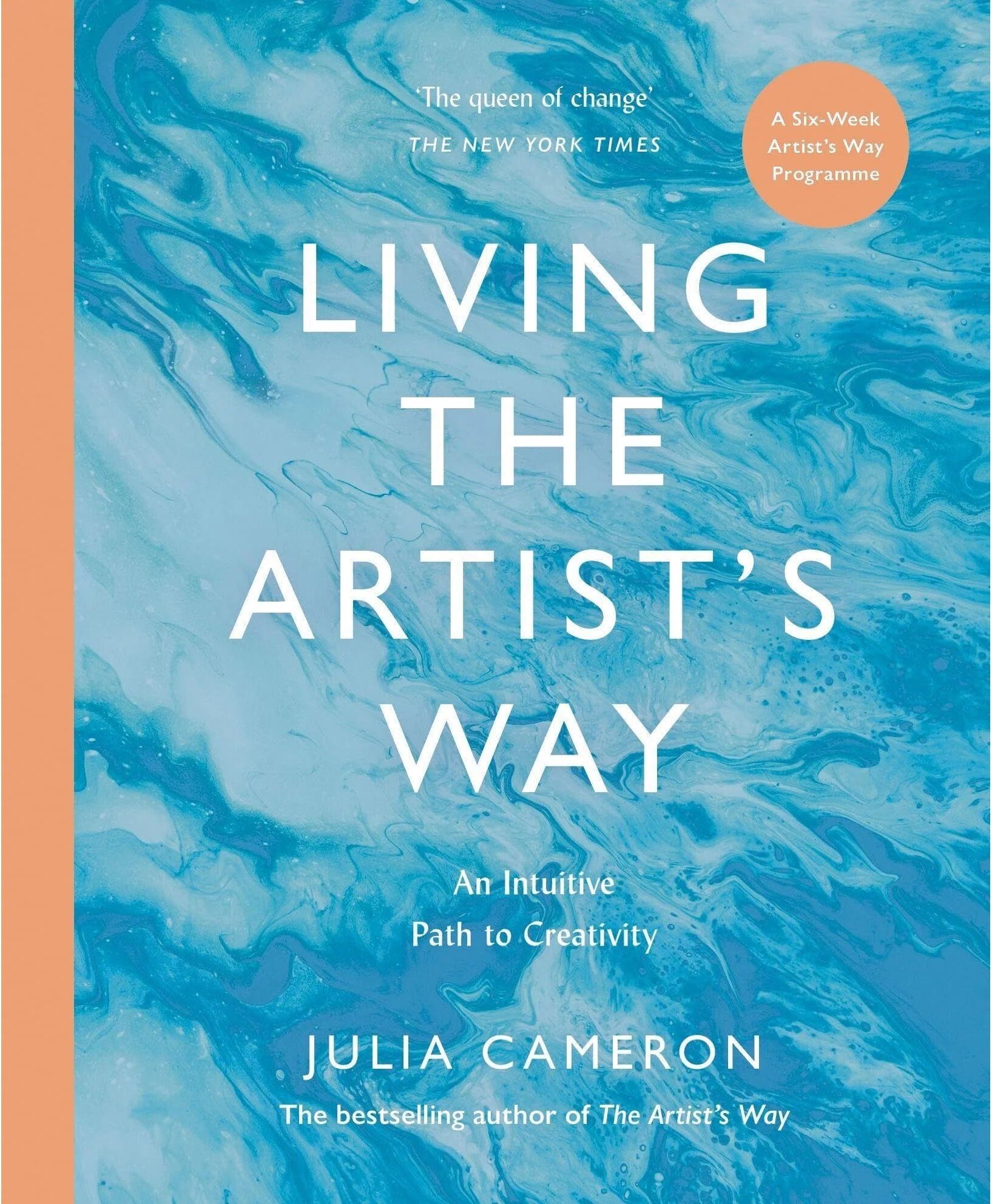
Souvenir Press Living the Artist's Way: An Intuitive Path to Creativity by Julia Cameron - Paperback Self-Help Book on Creativity & GuidanceDiscover Julia Cameron's intuitive path to creativity with Living the Artist's Way, a practical companion for anyone seeking to deepen their creative recovery and quieten self-doubt. This brand new paperback from Souvenir Press invites readers into a deeply personal exploration of how guidance, both spiritual and intuitive, can transform the creative life. Cameron's signature practices, including Morning Pages, Artist Dates, and Walks, are built upon in this six-week programme, introducing readers to Writing for Guidance as a fourth core discipline. A warm and supportive guide for anyone looking to reconnect with their creativity and overcome self-doubt, Living the Artist's Way is a must-read for anyone on a journey of creative discovery.9,99 £*Shipping: 2,99 £Secure redirect to the provider
-
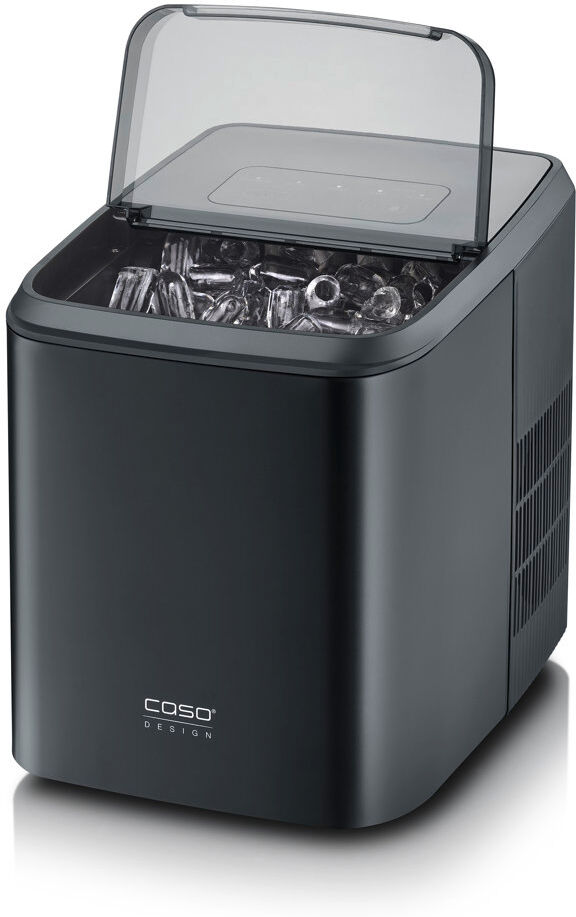
Caso Design Clear Ice Advanced Ice Cube Maker, 8.8kg Daily Production Black 30cm H X 24cm W X 29cm DProduce crystal clear ice cubes with the CASO Design Clear Ice Advanced ice maker. As well as classic ice cubes, the Clear Ice Advanced produces clear ice cubes that don’t just look stunning, they melt slower, leading to less dilution, improving the look and taste of your drinks. Powerful compressor technology operates at a quiet 48 dB, making ice in as little as 8 minutes and produces 320-350 g per hour or 7.7-8.8 kg in 24 hours. Brand Name: Caso Design.149,97 £*Shipping: 0,00 £Secure redirect to the provider
-
How do you calculate braking time and braking distance in physics?
In physics, braking time and braking distance can be calculated using the equations of motion and the principles of kinematics. The braking time can be calculated using the equation t = v/u, where t is the braking time, v is the final velocity, and u is the initial velocity. The braking distance can be calculated using the equation d = (v^2 - u^2) / (2a), where d is the braking distance and a is the deceleration. These equations take into account the initial and final velocities, as well as the deceleration of the object to determine the braking time and distance. **
-
Is braking a reflex?
Braking can be considered a reflex in certain situations. When a driver reacts to a sudden obstacle or hazard on the road by immediately pressing the brake pedal, it can be seen as a reflexive action. This is because the response is automatic and occurs without conscious thought. However, braking can also be a learned behavior, as drivers are trained to use their brakes in specific situations through practice and experience. Therefore, while braking can be a reflex in some cases, it can also be a learned and intentional action. **
-
What is the formula for braking acceleration and braking time in physics?
The formula for braking acceleration is given by \( a = \frac{v_f - v_i}{t} \), where \( a \) is the braking acceleration, \( v_f \) is the final velocity, \( v_i \) is the initial velocity, and \( t \) is the time taken to come to a stop. The formula for braking time can be calculated using the equation \( t = \frac{v_f - v_i}{a} \), where \( t \) is the braking time. These formulas are used to calculate the rate at which an object slows down when braking. **
-
What is the difference between a full braking and an emergency braking?
Full braking refers to applying the brakes with maximum force in a controlled manner to slow down or stop the vehicle. This can be done in response to normal traffic conditions or when approaching a stop sign or traffic light. On the other hand, emergency braking is a sudden and forceful application of the brakes in response to an unexpected hazard or danger, such as a pedestrian stepping into the road or a vehicle suddenly stopping in front. Emergency braking is typically done to avoid a collision and requires quick reflexes and a strong, immediate response from the driver. **
* All prices are inclusive of VAT and, if applicable, plus shipping costs. The offer information is based on the details provided by the respective shop and is updated through automated processes. Real-time updates do not occur, so deviations can occur in individual cases. ** Note: Parts of this content were created by AI.